
Education
What is the Entourage Effect?

Dec
If you’re a frequent cannabis user, you may have heard of the term “entourage effect”. What exactly does it mean? The entourage effect refers to the idea that cannabis compounds, like THC, CBD, and terpenes, work better together than they do alone.
Rather than relying on a single “active ingredient” doing all the legwork, the entourage effect emphasizes synergy. Much like an orchestra sounds better when all its instruments are in harmony, cannabis is thought to be more therapeutic and enjoyable when its many natural compounds play together.
In this article, we’ll break down what the entourage effect is, how it works, the science behind it, and what it means for cannabis consumers and patients alike.
What Is the Entourage Effect?
The entourage effect describes the enhanced effects that occur when multiple cannabis compounds are consumed together, rather than individually.
For example, THC (Tetrahydrocannabinol) is well known for its psychoactive and pain-relieving effects. But when THC is paired with CBD(Cannabidiol), CBG(Cannabigerol), or certain terpenes, the experience can shift dramatically. It may feel more relaxing, less anxiety-inducing, or longer-lasting, depending on the combination.
The term was first coined in 1998 by Dr. Raphael Mechoulam, the Israeli chemist who also discovered THC and CBD. He and his colleagues hypothesized that the various non-psychoactive cannabis compounds found in the plant may help regulate or enhance the effects of the primary cannabinoids like THC.
Key Players in the Entourage Effect
Cannabis contains hundreds of biologically active compounds. The entourage effect primarily involves cannabinoids, terpenes, and flavonoids.
1. Cannabinoids
These are the chemical compounds that directly interact with your endocannabinoid system (ECS). Your ECS controls and optimizes mood, sleep, and pain regulation. They include:
- THC (Tetrahydrocannabinol) – psychoactive, euphoric, pain relief
- CBD (Cannabidiol) – non-intoxicating, calming, anti-inflammatory
- CBG (Cannabigerol) – may enhance mood and focus
- CBN (Cannabinol) – mildly sedating
- CBC (Cannabichromene) – potential anti-depressant and pain relief benefits
Each cannabinoid affects the ECS differently, and combining them can either amplify or balance each other’s effects.
2. Terpenes
Terpenes are aromatic oils found in many plants, but especially abundant in cannabis. They give strains their unique scent and flavor—citrus, pine, skunk, or fruit—but also interact with receptors in the brain and body.
Some common cannabis terpenes include:
- Myrcene – sedating and muscle-relaxing
- Limonene – uplifting and mood-boosting
- Linalool – calming and anti-anxiety
- Caryophyllene – anti-inflammatory and pain-relieving
- Pinene – promotes alertness and memory
Terpenes can change how a high feels. For example, THC + myrcene may result in more sedation, while THC + limonene may feel more uplifting.
3. Flavonoids
Flavonoids are lesser-known compounds that contribute to the color, flavor, and antioxidant effects in cannabis. While their role in the entourage effect is still being explored, they likely support the therapeutic benefits of cannabinoids and terpenes.
Real-World Examples of the Entourage Effect
CBD and THC
CBD can buffer the intensity of THC. When taken together, CBD may reduce the anxiety or paranoia some people feel with high-THC strains. It may also prolong the effects of THC by inhibiting the enzymes that break it down.
This is why 1:1 THC:CBD products are often recommended for medical patients because they provide effective relief without overwhelming psychoactivity.
Terpenes and Mood
If you’ve ever wondered why a sativa-dominant strain makes you feel energized while an indica puts you to sleep, it might be due to the terpene mix:
- Strains high in limonene or pinene tend to feel more energizing.
- Strains with myrcene or linalool tend to feel more calming or sedating.
These terpenes don’t just add scent—they interact with the ECS and brain receptors to influence your experience.
What the Research Says
Although most cannabis research is still in its early stages due to decades of prohibition, some studies support the entourage effect.
- A 2011 review in the British Journal of Pharmacology found that terpenes can increase the therapeutic potential of cannabinoids, particularly for conditions like pain, inflammation, and anxiety. (Russo, 2011)
- A 2018 study published in Frontiers in Neurology noted that CBD-rich extracts were more effective for treatment-resistant epilepsy than purified CBD isolate, suggesting other plant compounds play a role. (Pamplona et al., 2018)
These findings point to a growing consensus: whole-plant cannabis products may be more effective than isolated cannabinoids for many conditions.
Why the Entourage Effect Matters for Consumers
Understanding the entourage effect can help you choose cannabis products that better match your goals—whether you’re using cannabis for medical purposes or just recreation.
1. Whole-Plant vs Isolate
- Isolates (like pure CBD) may lack the synergistic power of terpenes and other cannabinoids.
- Full-spectrum products contain the full range of compounds and are more likely to produce the entourage effect.
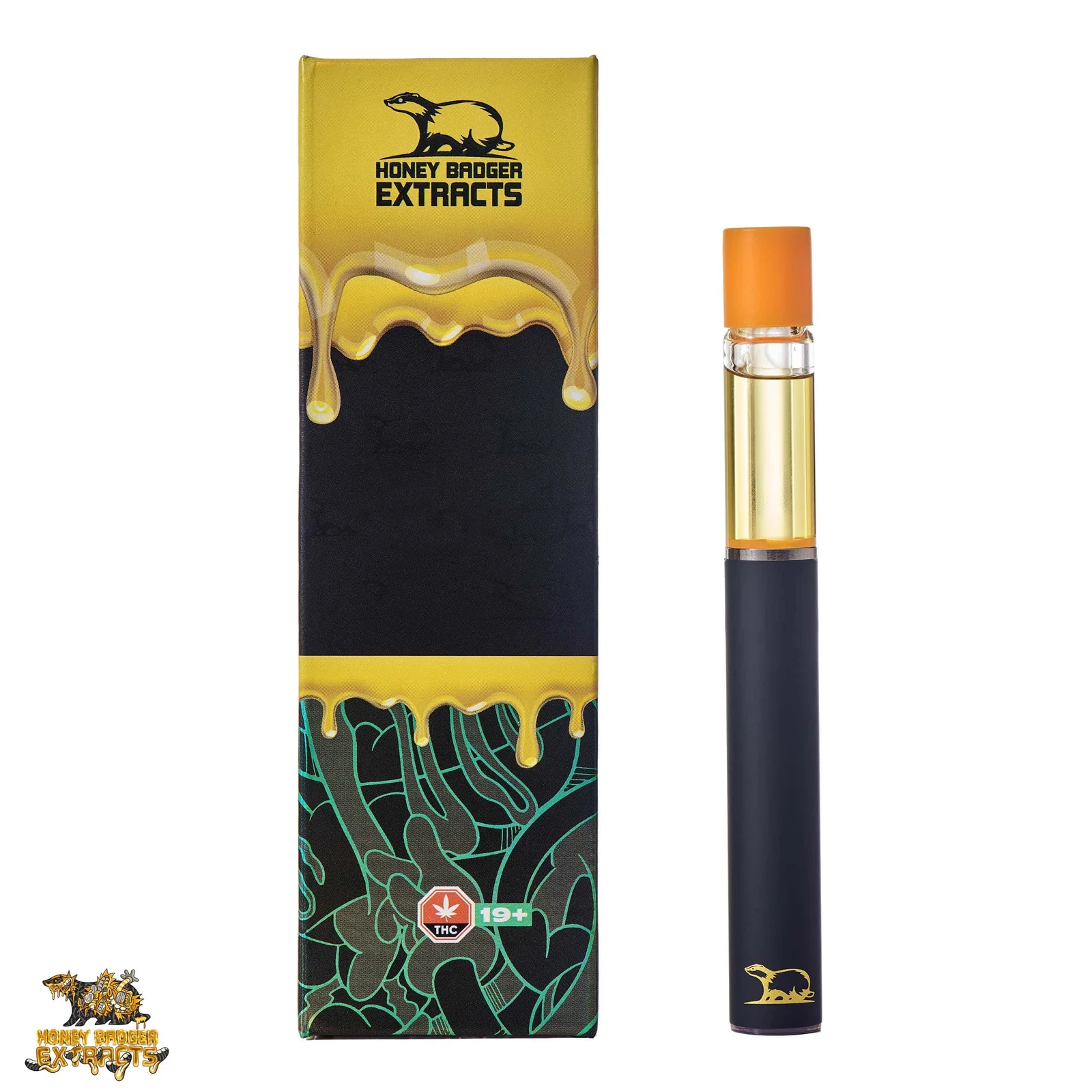
If you want the most complete benefits, look for full-spectrum or broad-spectrum extracts, not isolates. At Golden Boy Express, we carry a variety of high-quality full-spectrum and broad-spectrum THC products like carts and distillates.
2. Strain Selection
Knowing the terpene profile and cannabinoid content of a strain is more useful than simply choosing based on “indica” or “sativa” labels. A high-THC strain with limonene may feel very different than one with high myrcene—even if both are indicas.
3. Medical Use
The entourage effect could explain why some patients respond better to certain cannabis combinations. For example, someone using cannabis for pain may benefit more from a THC-dominant strain rich in caryophyllene and myrcene, while someone managing anxiety may prefer a CBD-rich product with linalool.
Final Thoughts
The entourage effect is more than a buzzword; it’s a foundational principle in cannabis science. While more clinical research is needed, both anecdotal reports and emerging data suggest that cannabinoids and terpenes work best when they’re together.
Understanding this synergy can help you:
- Choose better products
- Customize your cannabis experience
- Maximize therapeutic outcomes
- Reduce unwanted side effects
In a world flooded with cannabis options, awareness of the entourage effect helps you go beyond THC percentages and unlock the full potential of the plant.
Sources:
- Russo, E. B. (2011). Taming THC: Potential cannabis synergy and phytocannabinoid-terpenoid entourage effects. British Journal of Pharmacology, 163(7), 1344–1364. Link
- Pamplona, F. A., da Silva, L. R., & Coan, A. C. (2018). Potential Clinical Benefits of CBD-Rich Cannabis Extracts Over Purified CBD in Treatment-Resistant Epilepsy: Observational Data Meta-analysis. Frontiers in Neurology, 9, 759. Link

Pingback: What Is CBG? Deep Dive Into Cannabigerol – Golden Boy Express
Pingback: Ultimate Wedding Cake Strain Review | Golden Boy Express
Pingback: Girl Scout Cookies Strain Review | Golden Boy Express